When organisations in the UK develop digital health products, regulatory compliance becomes a key requirement. Whether it is a mobile app, medical software, or hospital system, ensuring patient safety is essential. This is where clinical safety consultancy plays an important role. These consultants help organisations meet NHS standards, manage risks, and prepare important documents such […]
How Should UK Buyers Compare Digital Health Suppliers? Digital health technologies are becoming very common in the UK healthcare system. Hospitals and organisations now use software and digital tools to improve patient care and manage services more efficiently. However, choosing the right supplier is very important. UK buyers should compare digital health suppliers by carefully […]
As digital health technologies expand across the UK, organizations face an important decision. Should they work with a specialist clinical safety or a generalist health tech consultancy? At early stages, both may seem equally capable. However, when a product begins to affect patient care, NHS workflows, or regulatory compliance, this choice becomes difficult. Selecting the […]
Since the digital systems have become more integrated in clinical processes, such as electronic prescribing or decision support and AI-based tools, the need to prove safety in a structured and transparent manner has become a more significant concern. The clinical safety case is not merely a document produced at the end of a regulatory process. […]
Clinical safety consultancies are important in aiding safe digital transformation in health care systems like the NHS. With the growing use of complex digital tools by organisations, such as electronic patient records, interoperability platforms, and systems with AI, the necessity of organised clinical risk management has increased. But not every consultancy is as good or […]
With health technology organisations and NHS Trusts struggling through tricky regulatory environments, a number have sought the services of external consultancies to oversee the clinical risk management procedures. Nevertheless, not every consultancy has that certain set of competencies that guarantee adherence to the UK standards. The wrong choice of partner may result in regulatory stalling, […]
In the United Kingdom, the implementation of Artificial Intelligence is highly controlled by the medical device regulations and clinical safety standards. AI is based on probabilistic models, compared to conventional software validation which is based on deterministic logic. This difference will need continued evolution of regulation compliance, generation of evidence, and risk control based on […]
The MHRA is kicking off a consultation to figure out if CE-marked medical devices should keep their recognition in Great Britain beyond the current temporary setup. This discussion revolves around possibly giving certain CE-marked devices indefinite recognition, along with some transitional and reliance measures. The consultation started on February 16, 2026, and you’ve got until […]
The unwitting use of biased AI software within the NHS presents both ethical and safety challenges. AI systems influence diagnosis, triage, monitoring, and prioritisation. Uneven model performance across patient groups can therefore create unequal outcomes and unintended harm. AI bias occurs when a system demonstrates systematic performance disparity between populations, even where overall accuracy appears […]
Artificial intelligence does not just require technology, but also organisational capability to allow safe adoption of artificial intelligence in healthcare. AI systems affect the clinical judgement, workflow, and prioritisation, implying that their safe use depends on knowledge and behaviour of the workforce working with them. Unless AI systems receive proper training, they can be misinterpreted, […]
Clinical and operational decision-making in healthcare is supported by artificial intelligence systems that are becoming more and more popular in healthcare. Although these systems have the possibility of providing clinical benefit, they also present additional risks compared to traditional medical software AI bias is one of the most important and the least understood risk. Uncontrolled […]
Artificial intelligence is becoming increasingly common within the UK healthcare sector as organisations rush to embrace the efficiency savings the technology can bring to their clinical and administrative operations. However, simultaneously, there is increased public and political awareness of the potential negative associations with AI, and an expectation for the regulators to better safeguard the […]
Artificial intelligence-powered clinical systems have are becoming become a standard healthcare provision tool within the NHS, as have other industries that have adopted AI to structure their operations. This embedding into extends beyond administrative workflow automation, diagnostic assistance and risk management to automation of workflow and patient monitoring. With the embracing of AI came risks […]
The importance of navigating the UK’s AI and digital health regulatory landscape has never been greater. With AI adoption accelerating across NHS Trusts, hospitals, and digital health vendors, healthcare leaders must understand the current 2025 framework to ensure patient safety, compliance, and operational efficiency. This article provides a comprehensive guide to NHS AI regulations, clarifying […]
Artificial intelligence is now embedded across healthcare, from risk stratification and clinical decision support to diagnostics, workflow optimisation, and population health management. For NHS organisations and healthcare providers, the challenge is no longer whether AI will be used, but how it can be deployed safely, responsibly, and in line with regulatory expectations. Clinical AI governance […]
As AI technologies become embedded in NHS operations, from predictive analytics and diagnostic imaging to virtual care and patient monitoring, healthcare leaders face the challenge of balancing innovation with patient safety, regulatory compliance, and operational reliability. Clinical AI governance is the structured framework of policies, processes, and oversight that ensures AI systems in healthcare are […]
A robust Clinical Risk Management System provides a systematic evidence-based process for identifying and mitigating risks at all stages of a digital system’s lifecycle, promoting safe clinical practice and minimising points of failure. A case Study: The Implementation of a Vital Signs Monitoring Solution An NHS Trust is about to implement a vital signs monitoring […]
We are at the beginning of a rapid digital transformation in the health and social care sector. Digital Health Technologies are becoming intelligent, connected and embedded in everyday care. AI, IoT-enabled devices, and patient wearable devices are changing the way care is provided, yet they are also redefining the nature of clinical risks NHS organisations […]
Successfully bringing digital health tech to market is as much of a test of your stamina and endurance, as it is the quality of your product. Manufacturers must balance innovation and safety, speed and thoroughness. Regulation can often feel like an unnecessary drain of your time and money. Here we discuss some of the common […]
From electronic prescribing to triage apps and remote monitoring platforms, digital health systems now form the hub around which patient care revolves. This evolution carries one non-negotiable responsibility: ensuring the technology is safe. Formal health IT clinical risk assessment is a means for organisations to identify evaluate and mitigate risks that can either directly […]
Whether you are a hospital deploying a new digital system, or a manufacturer developing new software, the DCB Safety Standards are your first line of defence against avoidable patient injury and your ticket to successful procurement and deployment Breaking the Silence – What Are These Standards? The two safety standards, DCB 0129 & […]
Patient safety should be the cornerstone of healthcare delivery in the digital age. Your Clinical Safety Officer (CSO) offers your organisation a regulatory and clinical safety lifeline, ensuring innovation and safety align, while assisting in avoidance of common health-tech pitfalls. What is a Clinical Safety Officer (CSO) and When Do You Need One? […]
Are you stuck in the minefield of public health-tech procurement? If you are (or about to start) selling into the NHS you will no doubt come across a four-letter acronym called DTAC. The Digital Technology Assessment Criteria (DTAC) is not a piece of over-complicated governance but is how the NHS achieves the […]
Healthcare is at the beginning of rapid digital transformation. Innovative clinical and administrative technologies, often driven by Artificial Intelligence, is altering the future of the health and social care sector, driving more quicker, efficient, and more personalised care. How can we drive innovation without affecting patient safety? Clinical risk management seeks to balances […]
The NHS Confed Expo in Manchester last week offered a compelling glimpse into the future of health and care in the UK. At the heart of the discussions was the government’s ambitious 10-Year Health Plan, a blueprint for radical reform, cultural transformation, and technological innovation. With over 17,000 voices contributing to its development, the plan reflects […]
Clinical Safety in practice Artificial Intelligence (AI) has the potential to revolutionise global healthcare, offering significant benefits to clinicians, administrators, and patients through increased efficiency and optimised decision-making processes. Despite the excitement in the health-tech and governmental sectors, there is some scepticism among patients, clinicians, and the public, often fuelled by media predictions of an […]
The NHS is rapidly transitioning from ‘Analogue to Digital,’ a modernisation effort aimed at increasing efficiency, reducing waiting times, and improving patient outcomes. With a wealth of exciting health tech innovations on the market, how can healthcare organisations ensure they are choosing the right technology and not exacerbating the inefficiencies and patient safety concerns they […]
Are you a supplier looking to break into the NHS market? You may have heard of, or been asked to supply evidence of your compliance with the Digital Technology Assessment Criteria – called DTAC for short… But what exactly is it, and how can it help you stand out? Let’s dive in and find […]
Hey there, health tech enthusiasts! Today, we’re exploring DCB 0129, a crucial standard for anyone developing health IT systems or looking to sell into the UK healthcare sector. Whether you’re a seasoned developer or a newcomer, understanding DCB 0129 is key to ensuring your products are safe and compliant. This article answers some of […]
Welcome to our comprehensive series of articles dedicated to exploring clinical safety, regulatory compliance and the practical application of healthcare safety standards within artificial intelligence. This series aims to provide in-depth insights into DCB 0129, DCB 0160, DTAC, and the safe implementation of AI technologies. Whether you’re a health-tech developer, healthcare professional, a tech enthusiast, […]
Our founder and Clinical Safety Officer, Tom, had an action-packed visit last week to Digital Health Rewired 2025 at the NEC in Birmingham – an event that continues to be a key highlight in the health tech calendar. Throughout the two days, Tom attended insightful sessions on AI in clinical settings, workflow innovations, and digital […]
We’re excited to attend Digital Health Rewired 2025 at the NEC in Birmingham on March 18-19! This event is a hub for digital health leaders, showcasing the latest innovations in AI, data, and integrated care. It’s a fantastic opportunity to explore emerging technologies and learn from industry experts. We’re especially excited about sessions on […]
If you’ve been following the news, it might seem like primary care is facing endless challenges—poor GP access, surgery closures, and lack of continuity in care are frequently highlighted. This can be demoralising for the dedicated staff on the front lines, but it’s important to note that primary care has delivered more appointments post-pandemic than […]
oin Tom and Dr. Johnathon Sackier on the EMJ podcast for an engaging dive into health tech. Tom shares his journey in digital health, offering insights as a Clinical Safety Officer and advisor to top companies like RadAi and EMIS.
Co-authored by Tom Bradshaw, Clinical Safety Officer & GP and Founder of BMS Digital Safety, and Dean Mawson, Clinical Director / Founder, DPM Digital Health Buying budget – not always buying best. Ever regretted buying that knock-off detergent that left you with a nagging itch? Sometimes cost cutting isn’t worth it. The same goes for […]
The NHS waiting list crisis reflects broader issues in primary care, exacerbated by increased demand and overworked GPs. Effective solutions require collaboration between primary and secondary care, emphasising prevention and holistic patient management to alleviate pressures and improve outcomes.
BMS Digital Safety launched a revamped look for 2025, featuring a new website with enhanced navigation, interactive features, and insights on health-tech regulation and clinical safety.
BMS Digital Safety will present its Clinical Safety Solutions at the GIANT Health Conference in London on December 9-10, 2024, showcasing innovations in health-tech regulation and patient care.
The UK government acknowledges the potential of AI in healthcare but faces challenges with NHS digitisation. Balancing innovation with patient safety and reducing red tape cautiously is essential for progress.
A Clinical Safety Officer (CSO) is pivotal in ensuring the safety and efficacy of medical products within health tech businesses. Their role encompasses a broad range of responsibilities aimed at protecting patient health and maintaining product quality. Definition and Scope: A CSO oversees the safety of clinical products by managing risk, ensuring regulatory compliance, and […]
In the evolving landscape of healthcare technology, ensuring the safety and effectiveness of health IT systems is paramount. This is where DCB 0129 and DCB 0160 come into play. These standards provide a structured approach to clinical risk management, crucial for both manufacturers and healthcare organizations. DCB 0129 focuses on the responsibilities of health IT […]
Key updates manufacturers need to know about clinical safety requirements and how they impact digital health products.
A deep dive into the unique clinical risks posed by artificial intelligence in healthcare and strategies for mitigation.
Why compliance is just the beginning, and how to foster a true culture of safety within your organisation.
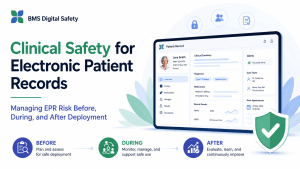
Essential steps and safety considerations when implementing a new Electronic Patient Record system.