Clinical Safety, DTAC, Medical Device, Data Governance and Cybersecurity
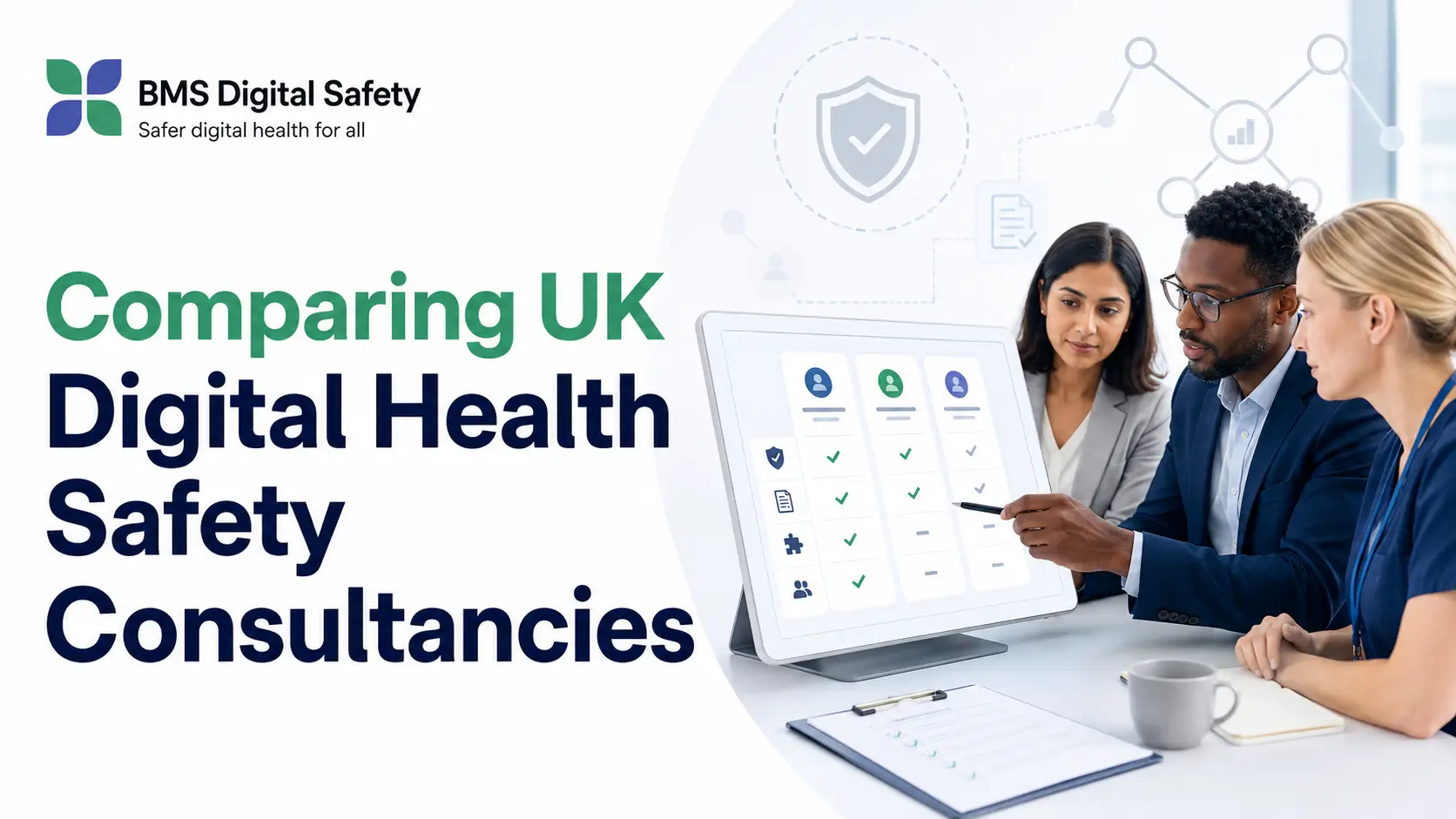
The UK health tech market is growing quickly. With this expansion, more consultancies are offering support for NHS compliance. However, not all providers cover the same areas. Some focus only on clinical safety, while others specialise in data protection or cybersecurity. For buyers, it is essential to compare digital health safety consultancies across the UK using a clear framework. Relying on one narrow specialism is not enough.
Why a Single-Focus Consultancy Is Rarely Enough
Many digital health products need to meet several compliance requirements at the same time, not just one. A product might pass a clinical safety review but still fail on data governance. It could meet cybersecurity standards but lack proper DTAC documentation. Buyers looking for a health tech compliance consultancy in the UK should consider more than just a single area of expertise.
A good digital health safety consultancy should cover:
- Clinical safety and risk management
- DTAC readiness and NHS assessment support
- Medical device compliance support
- Data governance and information governance
- Cybersecurity risk assessment
Clinical Safety and DCB 0129
Clinical safety is central to any assurance framework. A consultancy should show real experience in producing clinical safety cases under standards like DCB 0129. This includes:
- Identifying and assessing clinical risks
- Clearly documenting safety controls
- Supporting ongoing safety monitoring after deployment
DTAC and NHS Readiness
DTAC has become a standard expectation for digital health products entering the NHS. A strong consultancy should help organisations across all four DTAC areas:
- Clinical safety
- Data protection
- Technical security
- Usability and accessibility
Medical Device Compliance
When software qualifies as a medical device, consultancies must also understand UKCA and CE marking, along with ISO 13485 and ISO 14971. Medical device compliance support should include:
- Classification and risk categorisation
- Technical documentation preparation
- Guidance on quality management systems
Data Governance and Cybersecurity
Data governance and cybersecurity are often treated as separate areas, but they overlap significantly. A capable partner should provide support with:
- DSPT and information governance requirements
- ISO 27001 alignment
- Ongoing cybersecurity risk assessment and monitoring
Together, clinical safety, DTAC, cybersecurity, and data governance form the foundation of effective NHS supplier due diligence.
A Practical Framework for Comparison
When comparing consultancies, buyers should consider:
- Do they cover clinical, regulatory, data, and security assurance together, or just one area?
- Can they provide real NHS project experience across each category?
- Do they offer ongoing monitoring or only one-time reviews?
- Can they serve as a single health tech assurance partner instead of needing multiple providers?
Why This Matters for Buyers
Working with a fragmented set of specialists often leads to gaps, delays, and duplicated efforts. A single consultancy that covers the entire compliance landscape typically delivers faster approval, clearer accountability, and stronger evidence for procurement.
Conclusion
Choosing the right partner is about more than just price or reputation. By evaluating consultancies based on:
- Clinical safety and DCB 0129
- DTAC readiness
- Medical device compliance
- Data governance
- Cybersecurity
Buyers can make a truly informed decision. As NHS compliance expectations keep rising, working with a digital health safety consultancy that addresses the full compliance picture is no longer optional. It is the safest way to enter the market.